
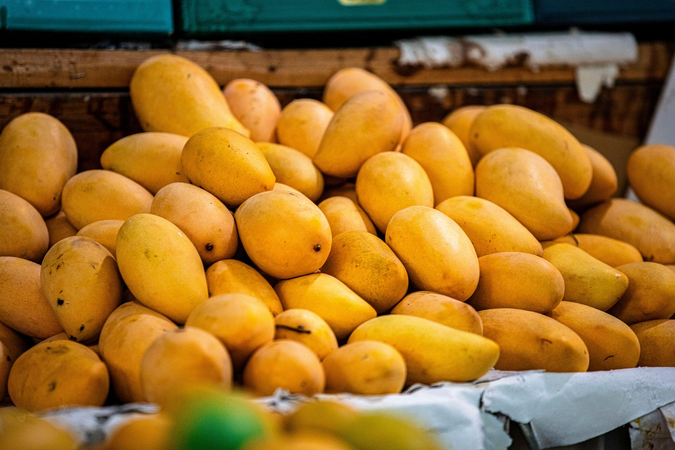
At the market, a mango’s color can be a tempting shortcut: red must be ripe, green must be tart. But peel color varies by variety, and it tells only part of the story. Taste, texture, and a little gentle pressure offer a better introduction.
Variety changes the experience
Ataulfo mangoes are often small and golden, with smooth, tender flesh and a creamy texture when ripe. Kent mangoes tend to be larger, with juicy flesh and relatively little fiber. Haden mangoes can show a red-and-green blush, but that striking skin is not a reliable ripeness gauge on its own.
Read the fruit, not just the peel
Give a mango a gentle squeeze near the stem end. A ripe one often yields slightly, much like a ripe peach; a firm fruit may need more time at room temperature. A sweet, fruity aroma near the stem can be another clue, though no single signal works perfectly for every variety.
Choose for how you’ll eat it
For slices to eat out of hand, a tender, juicy mango may be just right. If you want pieces that hold their shape in a salad or salsa, look for flesh that is ripe but still fairly firm. The useful question is not which mango is best, but which texture and flavor suit the moment.