
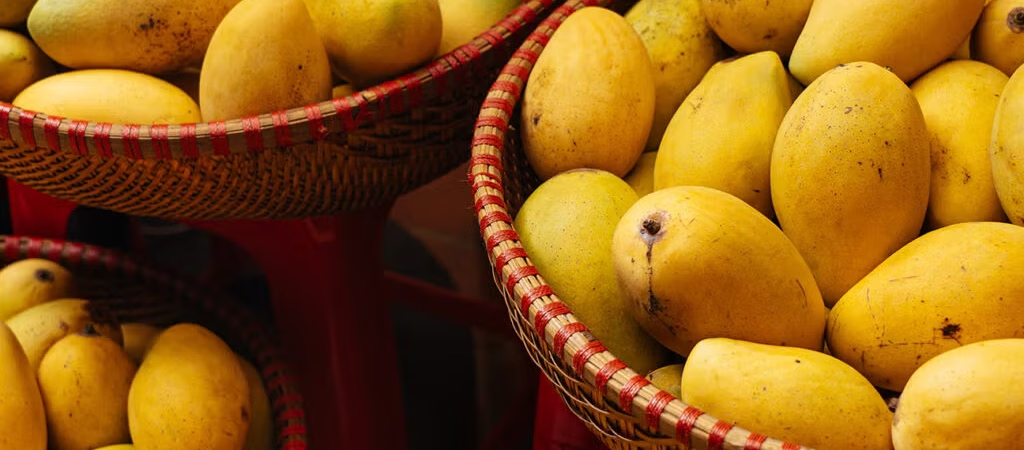
Cutting into a mango reveals its defining feature: a broad, hard seed surrounded by fleshy fruit. Botanically, that makes a mango a drupe, the same general kind of fruit as a peach or plum. In the produce aisle, though, you are more likely to hear it called a tropical fruit.
Botany looks at structure
An indica has an outer skin, a fleshy middle, and a hard inner layer that encloses its seed. With a mango, that seed sits inside a large, flat stone that can be tricky to cut around. This is why slicing down each side of the fruit, close to the stone, is usually more practical than trying to halve it like an apple.
Food labels serve another purpose
In everyday cooking, “tropical fruit” describes the kind of fruit you might pair with lime, coconut, or chile. It is a useful culinary grouping, not a botanical one. So the two labels are not in conflict: mango is a drupe by structure and a tropical fruit in common food language.
The category won’t predict flavor
Knowing a mango is a drupe tells you about its seed and flesh, not whether it will taste tart, floral, or especially sweet. Variety and ripeness matter more for that. For a clean cut, feel for the broad stone with your knife and let the shape of the fruit guide you around it.